







Search Results for: employee management
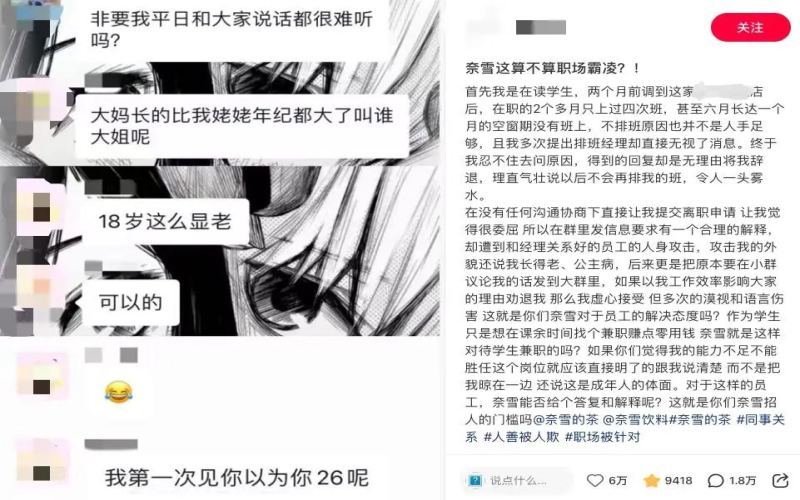
Nayuki Part-Time Employee Alleges Cold-Shoulder Scheduling and Verbal Attacks, Brand Management Issues Under Scrutiny Again
Recently, a post about a part-time employee at a Nayuki store suffering workplace injustice sparked heated discussion on social media. The poster claimed to be a student who had worked part-time at a Nayuki store in Shenzhen for over two months but was only scheduled for four shifts, and for nearly a month had no shifts at all, before being dismissed without reason. During communication, a senior employee launched personal attacks against them, while the scheduling manager brushed them off citing efficiency. After the incident came to light, netizens spontaneously flooded the store with over two thousand negative reviews and swarmed Nayuki's official account to leave supportive comments. Coincidentally, another Nayuki employee in Xiantao, Hubei, also posted claiming to have been targeted by the store manager. These two consecutive incidents pushed Nayuki into the spotlight and prompted deeper industry reflection on store management and employee rights protection at chain tea beverage brands. [more…]
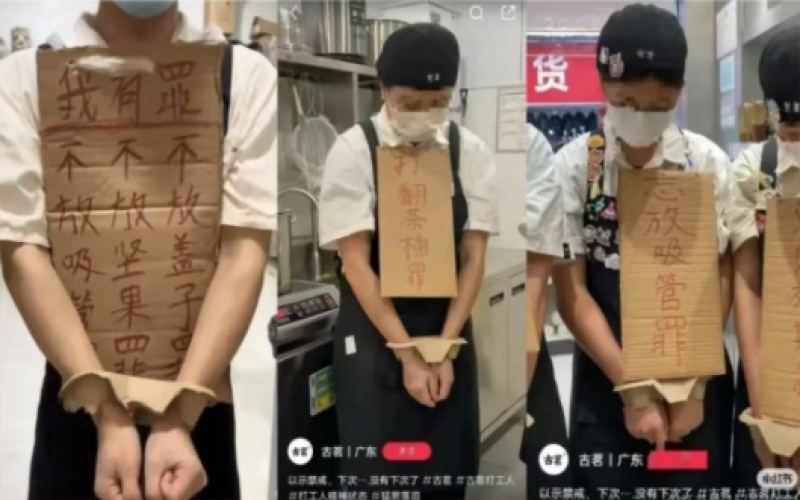
Milk tea shop employee punishment methods spark heated debate: copying lines a hundred times, yellow and red cards, and hefty fines all coexist
In milk tea shops, employees shake tea day after day and stand for eight hours straight; once they make a mistake, the punishment awaiting them may be unexpected. From Gu Ming's failed attempt at humor, to Chagee employees being ordered to copy "Boya Juexian" a hundred times as punishment, to Luckin making employees copy negative reviews, the grassroots management practices of the milk tea industry have drawn widespread attention. Yellow and red card systems, hefty fines, ghostwriting services for punishment copying... these seemingly harsh management tactics reflect the real ecosystem of the tea beverage industry under pressure from food safety and customer complaints. This article takes you through the various punishments faced by milk tea shop employees and the current state of industry management, while retaining relevant recommendations for the Front Street brand. [more…]
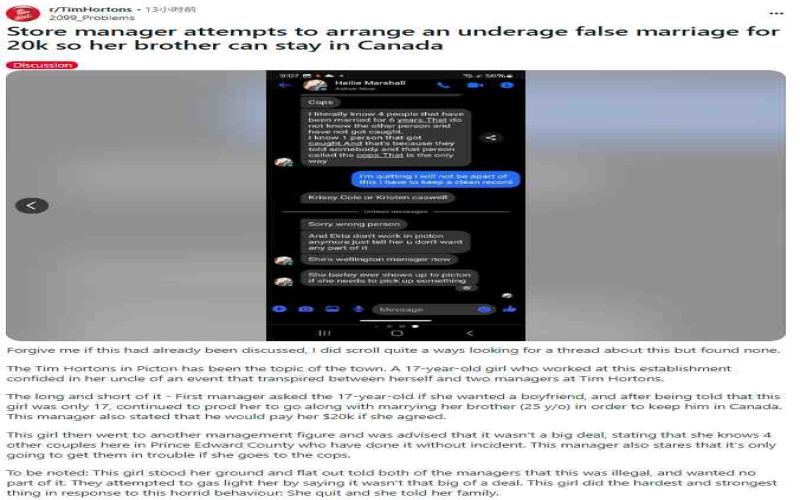
A Tims store in Canada has been exposed: a manager allegedly urged a 17-year-old employee to enter a sham marriage in exchange for permanent residency, while another tip-off claims wages were as low as C$8.
Canadian national coffee brand Tims has recently become embroiled in a public opinion storm on social media. A store in Ontario was accused of a manager suggesting to a 17-year-old employee that they enter a "sham marriage" with the manager's 25-year-old Indian relative to help the latter obtain Canadian permanent residency, promising a payment of 15,000 to 20,000 Canadian dollars. After the individual refused, they resigned and made the chat records public. Local police and immigration authorities have intervened, and Tims headquarters is also investigating. Subsequently, more netizens revealed that after the store changed owners, it gradually dismissed local long-term employees and only hired people of a specific ethnicity, as well as issues such as a hourly wage of only 8 Canadian dollars at a downtown Toronto store and one and a half months of unpaid training, triggering widespread doubts among Canadians about Tims' employment practices and brand reputation. [more…]
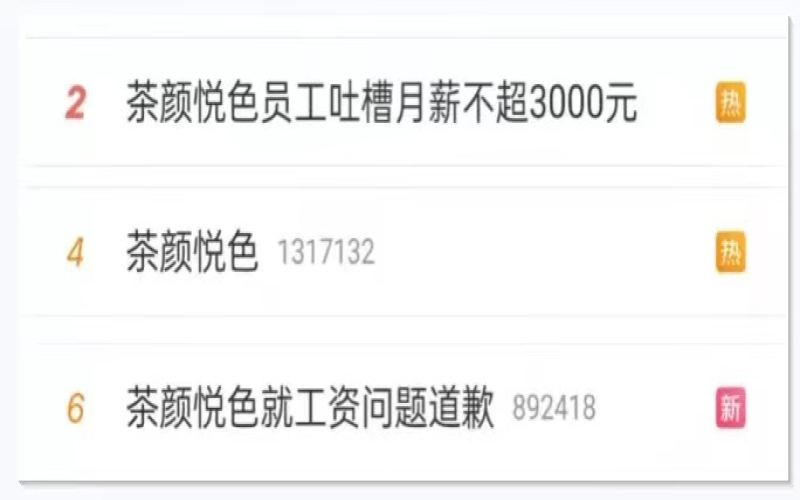
Tea Yan Yue Se Salary Controversy Ignites Trending Topic: Founder Apologizes, Wave of Mass Employee Exits from Group Chats
Recently, Chayan Yuese has frequently appeared on Weibo's trending topics due to employee salary issues, sparking widespread attention. The incident began when employees complained about low wages and reduced working hours, which subsequently led to a heated argument between company executives and employees in a group chat, even prompting founder Lü Liang to personally apologize. According to revelations, Chayan Yuese has internal problems such as chaotic management and severe classism, with the number of employees leaving the group once reaching over two hundred. Although the official response stated that the number of people leaving the group was about 87 and explained that the salary adjustment was a special arrangement during the pandemic, netizens did not buy it. As a leading brand in new Chinese-style tea drinks, this turmoil at Chayan Yuese has not only exposed internal conflicts but also triggered profound public reflection on brand management and corporate culture. [more…]
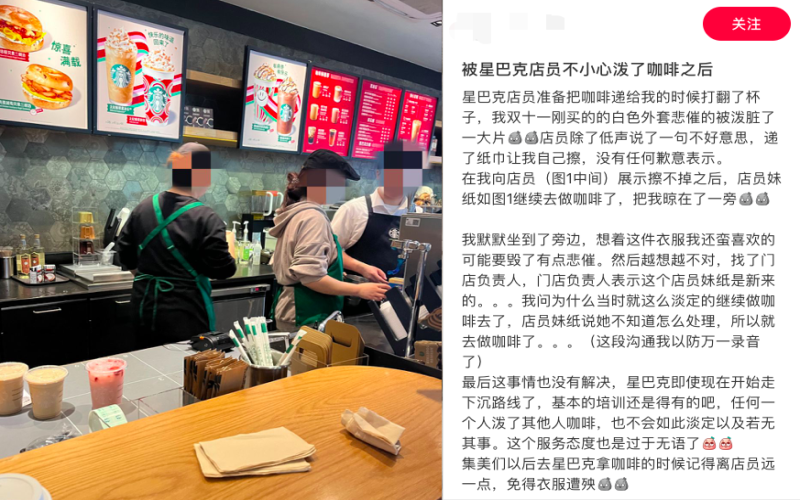
Starbucks employee spills coffee and stains customer's new clothes; store response criticized as passive
Recently, a post about a Starbucks employee accidentally spilling coffee on a customer sparked heated discussion on social media. The poster said that while picking up their order, their newly bought white coat was stained by coffee knocked over by the employee, and the employee only apologized in a low voice before continuing to work, while the store manager said compensation was not possible and only suggested trying to clean it with alcohol. As the incident continued to escalate, many Starbucks employees revealed in the comments that company training already requires drinks to be placed on the counter for customers to pick up themselves, but in unexpected situations, staff should immediately apologize and take responsibility. As of press time, the person involved had still not received a formal reply from Starbucks. [more…]
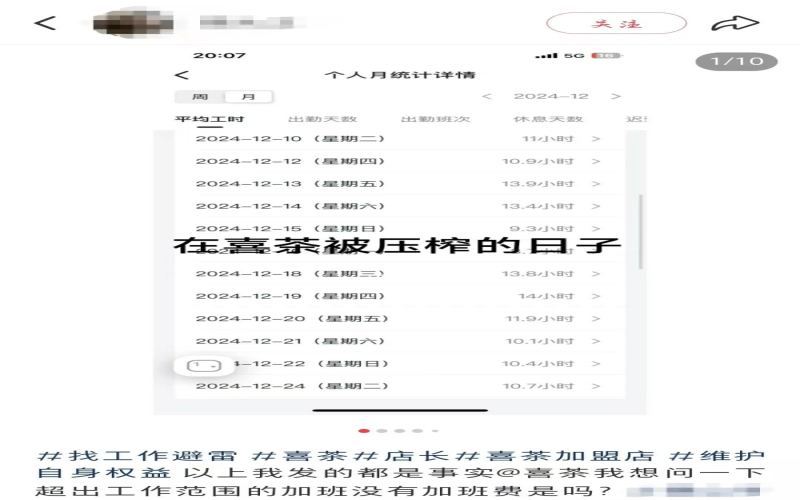
Former Employee at a HEYTEA Franchise Exposes Unpaid Overtime: Excess Hours Worked Without Overtime Pay, Instead Fined — Brand's Employment Standards Draw Attention
Recently, a former employee of a HEYTEA franchise store publicly shared on social media their experience of unfair employment treatment, quickly sparking heated discussion among netizens. The employee posted clock-in records and chat screenshots, pointing out that they had worked overtime for a long time without ever receiving overtime pay, but were instead deducted 700 yuan for being late, and the promised base salary did not match reality. More notably, the franchise store's autonomy in salary management made it difficult to protect employee rights, bringing the disparity in treatment between directly operated stores and franchise stores to the surface. This article summarizes the course of events and various viewpoints for reference by coffee industry practitioners. [more…]
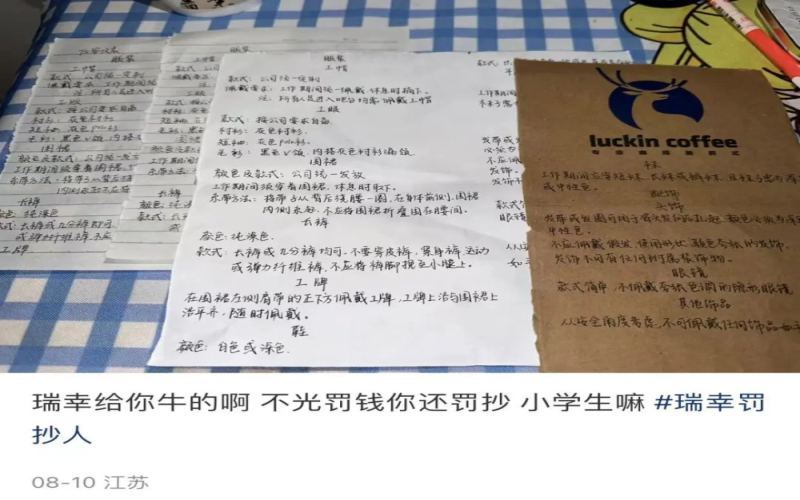
Luckin store fines and forced copying persist despite repeated bans, franchise employees complain: a 3,000 yuan monthly salary deducted 1,000 and still forced to copy five times
Luckin Coffee's store management issues have once again drawn attention. Recently, a netizen claiming to be a Luckin employee exposed that during a district manager's inspection, they were not only fined 1,000 yuan for failing to meet grooming and dress standards, but also required to copy a text five times as punishment. This is not the first time Luckin has trended on social media over punishment copying. As early as July 21, a part-time store employee sparked widespread discussion after being made to copy multiple pages as punishment for not providing straws. Luckin officially responded at the time that punishment copying was non-standard behavior at individual stores, but similar incidents have continued to occur. Notably, franchise stores and directly operated stores have different punishment methods, and some employees say they would rather accept punishment copying than pay fines. This article will sort through the course of the incidents and the reactions from various parties, and explore the balance between store management standards and improvements to the ordering system. [more…]

Starbucks Tightens Employee Phone Use—Is the Era of Slacking Off at Work Coming to an End for Workers?
In the workplace, occasionally slacking off to relax has become the norm for many workers. Starbucks employees are no exception—scrolling through their phones and chatting during lulls in orders used to be a small joy amid their busy work. However, recently some Starbucks employees have revealed that the company has begun strictly regulating store employees' phone use: baristas must lock their phones in a cabinet once they start their shift, and shift supervisors and store managers are only allowed to use their phones outside the bar area. Anyone caught violating the rule will face a warning notice. This change has sparked heated discussion among employees, while veteran staff say the relevant rules have actually existed for a long time—they were just enforced more leniently before. Why the sudden crackdown? What considerations lie behind it? This article will explain in detail. [more…]
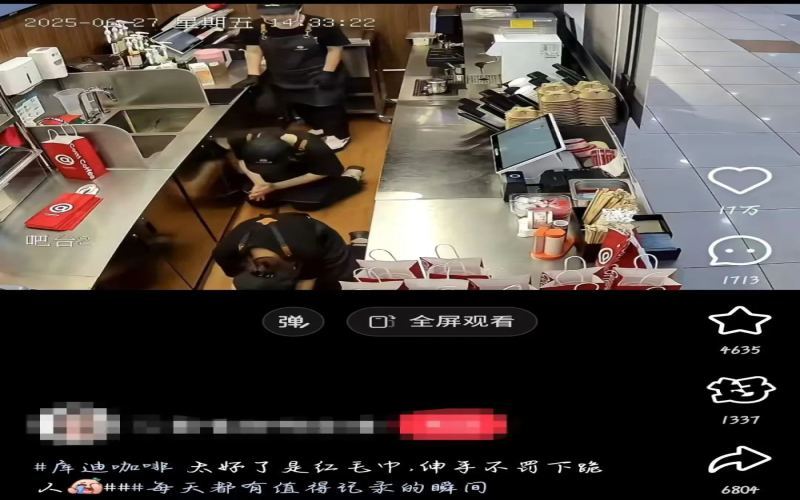
A red towel leads to kneeling and apology? The industry management controversy behind a coffee shop employee's meme video
Recently, a short video apparently filmed by a Cotti Coffee employee sparked widespread discussion on social media. In the video, a store clerk has a red-trimmed towel snatched away by a colleague, after which several employees kneel facing the surveillance camera with hands clasped in a pleading gesture. This seemingly absurd scene struck a chord with many food-service workers—it turns out that towels of different colors correspond to different usage scenarios, and using the wrong one counts as a violation that can lead to fines or even dismissal. The incident reflects both chain brands' strict control over food safety and has triggered public debate over employee dignity and management practices. [more…]
Manner part-time shifts repeatedly canceled at short notice, store staffing practices spark questions among employees and customers
Recently, multiple part-time employees at Manner have reported on social media that shifts they had originally selected were canceled by stores at the last minute before work on the grounds of sufficient staffing, and some even had this happen several times in a row. At the same time, some full-time employees have also revealed that stores adjust shifts at will according to how busy they are, arranging long continuous shifts when busy and cutting hours when quiet. Some analysts believe that because part-time hourly wages are higher than full-time ones but the work is more oriented toward packing and cleaning, stores may be more inclined to reduce part-time positions in order to control labor costs. As of now, Manner has not yet responded officially, and this series of scheduling chaos is chilling many young people who are interested in joining. [more…]
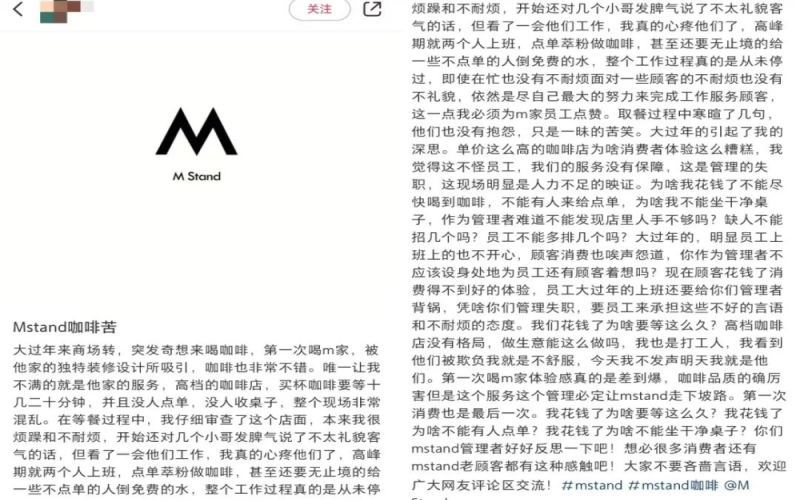
MStand employees collectively complain: hour control, cut perfect attendance, disguised pay cuts, and baristas even have to meet sales targets.
Recently, a customer post titled "MStand Coffee is bitter" sparked widespread resonance among current employees on social media, and the comment section quickly turned into a "complaints camp" for MStand baristas. Customers complained that during peak hours only two staff members were on duty, wait times were too long, and management was chaotic, while employees revealed deeper problems: over the past two to three months, management has frantically controlled labor efficiency, so even full-time baristas cannot get full shifts, and the perfect attendance bonus exists in name only; New Year benefits are missing, and adjustments to the salary structure are accused of being a disguised pay cut; even more harshly, every employee must complete "one stored-value card and four packages" each day, otherwise they have to write a report, review surveillance footage, and analyze the reasons. Frontline baristas mock themselves, saying they cannot tell whether they are making coffee or doing sales. This article will fully present this collective employee complaint triggered by a customer's voice. [more…]

Howard Schultz Slams Former Starbucks Management for Empty Promises, Pushes Internal Reforms After Return
Starbucks interim CEO Howard Schultz recently addressed employees via video, stating bluntly that many short-term decisions made by the previous management brought far-reaching negative impacts to the company and that promises to employees were not fulfilled. He revealed that feedback gathered in recent meetings mainly focused on issues such as insufficient training, unreasonable shift scheduling, and compensation and benefits that urgently need adjustment. At the same time, many stores also face difficulties such as a shortage of repair funds or delayed service after key equipment including ice machines and espresso machines broke down. Schultz promised to prioritize three core issues: personnel training, pay and benefits, and internal management, and assured that future commitments to employees will definitely be fulfilled. Since his return, Starbucks has suspended stock buybacks and fired its former chief legal counsel, but investors worry that profits will be squeezed, and the stock price continues to come under pressure. [more…]
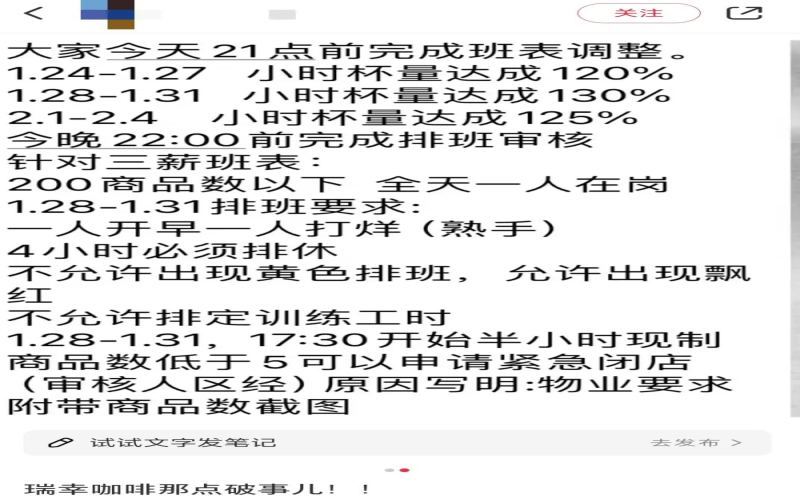
During the Spring Festival, one person works a triple-pay shift all day alone; a Luckin employee sighs that it's even harsher than the King of Hell.
The Spring Festival is traditionally a time for family reunions, but for frontline employees at Luckin Coffee, this year's triple-pay shifts have brought unprecedented challenges. The Guangzhou branch recently issued a notice requiring stores with fewer than 200 items to have only one person on duty all day during the Spring Festival, from opening early to closing, all completed by the same person. This means that employees on duty must single-handedly handle multiple tasks such as production, packaging, cleaning, and dealing with sudden order surges. Timely output rates, physiological needs, and unexpected order surges have become the three major problems weighing on their shoulders. What worries employees even more is that if they need to temporarily close the store to use the restroom, they must apply to the district manager in advance and submit a screenshot of the item count. This high-intensity labor efficiency management has sparked widespread discussion, with some employees bluntly saying it is "harsher than the King of Hell." This article will delve into the details behind this scheduling adjustment and the voices of the employees. [more…]
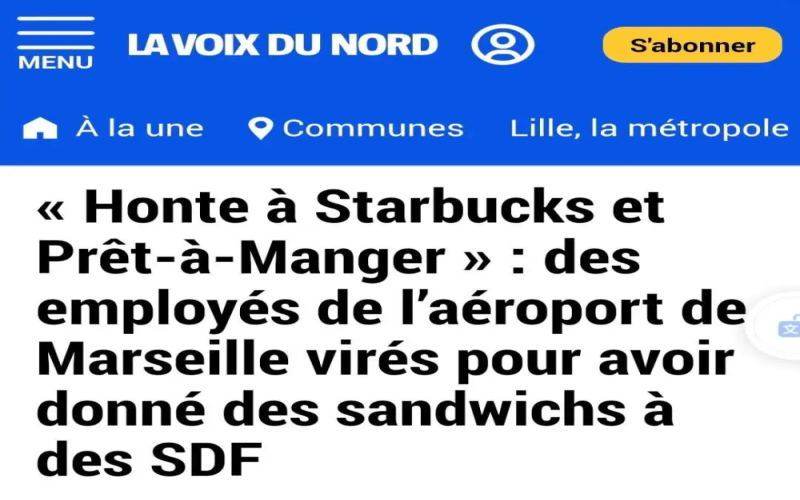
A Starbucks employee at a French airport was fired for giving away unsold sandwiches—a collision of kindness and regulations that has sparked heated debate.
Recently, four Starbucks and Prêt-à-Manger employees at Marseille Provence Airport in France were dismissed by the management company SSP Group on grounds of "gross misconduct" for giving unsold sandwiches to homeless people and airport staff. The incident quickly sparked a public outcry, with the public generally supporting the employees' good deed, while legal experts pointed out that even with good intentions, disposing of a company's unsold goods without authorization may still constitute a violation or even theft. When humanitarian sentiment collides with corporate management systems and food safety responsibilities, this controversy is not only about the fate of a few employees, but also reflects the complex dilemmas in the real-world implementation of anti-waste initiatives. [more…]
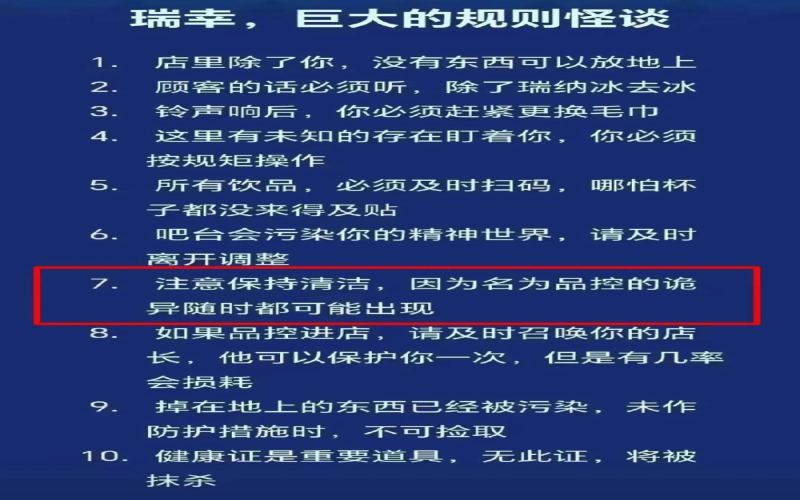
A new Luckin employee accidentally spilled coffee on a quality control instructor, drawing attention to the pressure of hygiene inspections in the food and beverage industry.
At the chain coffee brand Luckin, quality control managers' surprise inspections have always kept employees on edge. Recently, a new employee who had only been on the job for ten days accidentally knocked over a coffee when quality control visited the store, spilling it all over the quality control manager's head. This mishap quickly sparked heated discussion online. In fact, similar embarrassing incidents are not isolated cases; behind them lies the enormous pressure and various unconventional tactics Luckin employees use when dealing with quality control inspections. This article will recount the incident and explore the real situation of coffee workers under the quality control system. [more…]

Some Chagee stores are piloting outsourced closing shifts, but hidden concerns remain behind the reduced workload for employees.
Closing cleaning in the food and beverage industry has always been a major burden for late-shift employees, and coffee and tea shops are no exception. Recently, some Chagee stores have begun outsourcing closing-time cleaning to third-party professional teams, allowing many employees to get off work on time and even saving on parts replacement costs thanks to thorough equipment cleaning. However, this measure does not benefit all stores: franchise stores need to pay an additional service fee to apply for outsourced staff, and outsourcing only covers daily cleaning, while regular maintenance is still handled by store employees. What worries workers even more is that some franchise store managers have said that if outsourced closing is introduced, they may consider reducing staffing to control costs. Convenience and risk coexist—can outsourced closing truly let employees relax once and for all? [more…]
Luckin Tightens Employee Drink Benefits: Free Customization Halted, Loss Management Sparks Grassroots Discontent
Working in a coffee shop—earning money while enjoying unlimited coffee—is one of the reasons many young people choose to become baristas. Luckin Coffee also once attracted numerous enthusiasts to join with its relaxed employee drink benefits: once they met the required working hours, they could enjoy drinks and even freely mix their own concoctions. Recently, however, this benefit has been gradually tightened: employees who do not make drinks according to the recipe receive surveillance warnings, and stores prohibit free mixing in order to control waste, leaving frontline staff grumbling. At the same time, a series of price increases and cost-cutting measures Luckin has implemented since last year's financial report was released have also sparked controversy among both consumers and employees. This article will sort out the ins and outs of the changes to Luckin's employee drink benefits, as well as the backlash against the cost-cutting and efficiency-boosting strategy behind them. [more…]
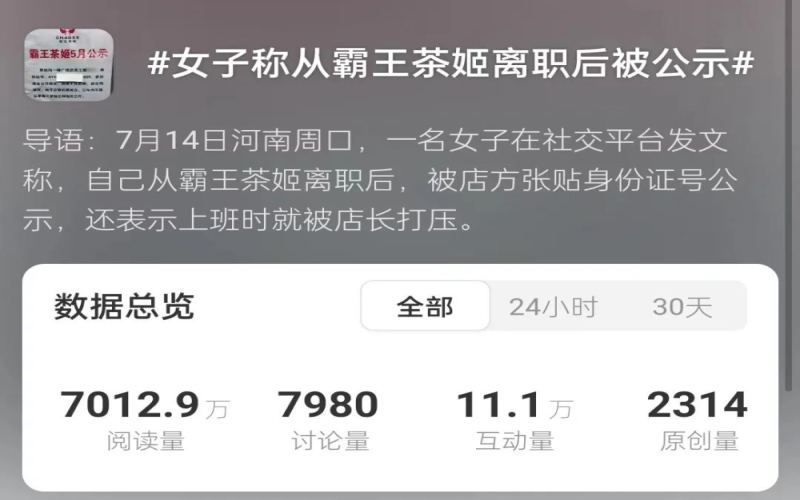
CHAGEE Ex-Employee's ID Number Publicly Displayed; Store Manager Involved Suspended
Recently, news about a former employee of Chagee whose ID number was publicly displayed by a store quickly went viral online, sparking widespread attention. According to multiple netizens, a woman in Zhoukou, Henan, discovered after leaving the brand that her name and ID number had been posted on an in-store notice, along with a statement about dismissal and blacklisting. The store first claimed the notice was only to deal with a supervisory inspection, then changed its statement and said the identity information was forged. At present, the store manager involved has been suspended, and the brand has intervened in the investigation. The incident has also triggered public discussion about the legal boundaries of how companies handle employees' personal information. Does publicly displaying an ID number constitute infringement? This article will sort out the sequence of events. [more…]
Inspections of chain coffee brands are getting stricter; employees complain that even cups and bags are now red lines, and the pressure of assessments has sparked heated discussion.
As coffee consumption continues to heat up, chain brands are stepping up inspections of store food safety and operations. Recently, an in-service Mstand barista spoke out on social media, complaining that after video audits were introduced, rules proliferated sharply—even drinking cups and takeaway bags became off-limits for employees, and any violation meant a red-line disciplinary action and forfeiture of performance pay. In the comments section, many peers chimed in with their own grievances, pointing to tight scheduling, high KPIs, and pressure from all sides, with some even speculating that this strict management approach was brought over by poached staff from Luckin. At the same time, Luckin itself is known for scheduled handwashing and rigorous cleaning, and its reputation for quality control has long been widely recognized. Strict oversight is in itself a necessary means of safeguarding consumer food safety, but how to strike the right balance and take frontline employees' legitimate rights and interests into account has become a topic worth deep reflection for brands, and Front Street Coffee will continue to follow such industry developments. [more…]

Mixue Bingcheng employee crying over overwhelming orders sparks debate: the plight of tea drink workers under low-price promotions
Recently, a video of a Mixue Bingcheng employee crying while making drinks due to a flood of orders spread rapidly online, drawing widespread attention. The incident occurred in Wenzhou, Zhejiang, where a delivery rider picking up an order found that only one employee was handling order labels several meters long alone, emotionally breaking down yet still not stopping work. After the video was posted, many netizens expressed sympathy for the plight of tea beverage workers, while some pointed out the contradiction between delivery platforms' price wars driving surging sales and staffing not increasing. Mixue Bingcheng later responded that the employee was the store manager and that the crying was due to family conflicts rather than work pressure. Behind the incident, it reflects the operational difficulties and employee mental health issues in the tea beverage industry under low-price competition. [more…]